● C71500 · UNS C71500

CuNi 70/30
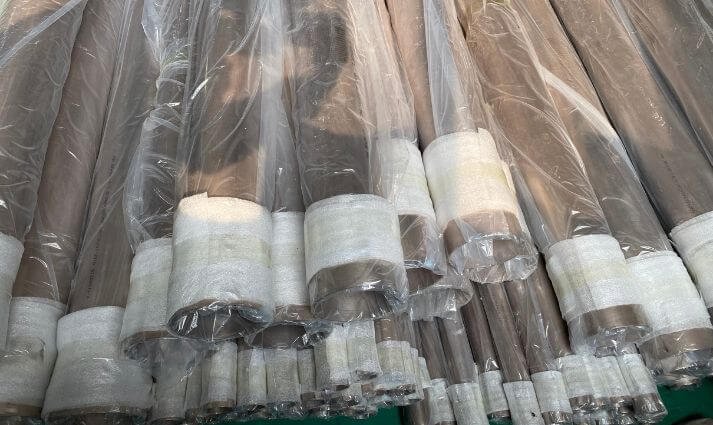
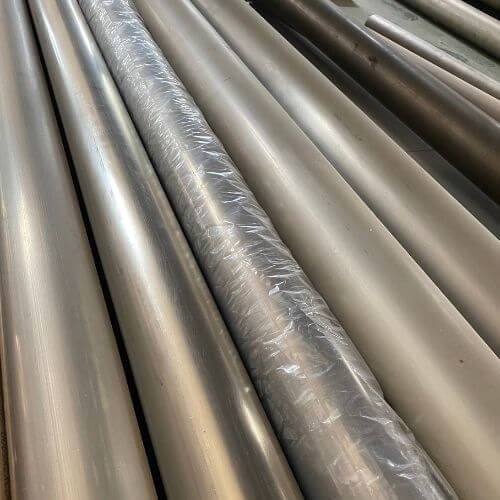
Seamless Pipes

The premium high-nickel Copper-Nickel grade for extreme service conditions — superior strength, outstanding resistance to high-velocity seawater erosion-corrosion, and exceptional performance in polluted or aggressive marine environments.

ASTM B466ASTM B111 DIN 17664BS EN 12449 ISO 9001:2015
Alloy Designation
C71500
Composition
70% Cu · 30% Ni
OD Range
6 – 168 mm
Primary Standard
ASTM B466
Product Overview

What is CuNi 70/30?

CuNi 90/10 Pipe


CuNi 90/10 Pipe

Copper-Nickel 70/30 (CuNi 70/30) contains 70% copper and 30% nickel with controlled additions of iron and manganese. Designated as C71500 (UNS) and CW354H (CEN), it offers significantly higher strength, hardness, and corrosion resistance than CuNi 90/10 — making it the preferred choice for the most demanding marine, offshore, and naval applications.

With a higher nickel content, CuNi 70/30 develops a more stable and protective oxide film in seawater, maintains superior performance at higher flow velocities (up to 4.5 m/s), and is more resistant to polluted seawater, sulphide contamination, and elevated temperatures. It is specified whenever CuNi 90/10 faces service limitations.

Higher Flow Velocity Resistance
Resistant to erosion-corrosion up to 4.5 m/s — significantly higher than CuNi 90/10's 3.0 m/s limit. Ideal for high-flow pump headers and discharge lines.
Superior Strength & Hardness
Minimum tensile strength of 380 MPa (vs 275 MPa for 90/10) — enables thinner wall designs and higher allowable working pressures.
Better High-Temperature Performance
Retains higher strength at elevated temperatures (up to 350°C in service) compared to CuNi 90/10, suitable for high-temperature heat exchangers.
Performance in Polluted Seawater
More resistant to sulphides and polluted seawater than CuNi 90/10 — recommended for harbour installations and coastal industrial outfalls.
Grade Comparison

CuNi 90/10 vs CuNi 70/30 — Which to Choose?

CuNi 90/10 (C70600)
Ni Content9 – 11%
Tensile Strength275 MPa min
Max Flow Velocity3.0 m/s
Max Service Temp200°C
Relative CostLower
Best ForStandard marine
VS
Choose based on
service conditions
CuNi 70/30 (C71500)
Ni Content29 – 33%
Tensile Strength380 MPa min
Max Flow Velocity4.5 m/s
Max Service Temp350°C
Relative CostHigher
Best ForOffshore / Naval critical
Detailed Grade Selection Guide
Service Condition Recommended Grade Reason
Standard seawater cooling (<3 m/s) CuNi 90/10 Cost-effective; adequate performance at normal velocities
High-velocity seawater (>3 m/s) CuNi 70/30 Better erosion-corrosion resistance at elevated flow rates
Naval/warship seawater systems CuNi 70/30 Higher strength; mandatory for most naval specs (MIL-P-24691)
Offshore FPSO seawater lift CuNi 70/30 Combined high flow, vibration, and fatigue demands
Desalination feedwater CuNi 90/10 Clean seawater at moderate velocities — 90/10 is adequate
Brine circuits (MSF) CuNi 70/30 Higher temperature and concentrated brine performance
Firewater/fire-main systems CuNi 90/10 Intermittent use; 90/10 is standard practice for fire-mains
Polluted or harbour seawater CuNi 70/30 Better sulphide tolerance and pollutant resistance
Steam surface condensers CuNi 70/30 Higher temperature service; superior long-term performance
Small bore instrumentation CuNi 90/10 Cost-effective; low flow rates in instrument lines
Chemical Composition

Alloy Chemistry — CuNi 70/30

Chemical composition per ASTM B466 / ASTM B111 (C71500). The significantly higher nickel content (30%) is the key to CuNi 70/30's superior performance.

Cu
Copper
Balance
Ni
Nickel + Co
29.0 – 33.0%
Fe
Iron
0.4 – 1.0%
Mn
Manganese
0.5 – 1.5%
Element Symbol Min (%) Max (%) Role in Alloy
Copper Cu Balance Balance Primary matrix — conductivity & corrosion base
Nickel + Cobalt Ni+Co 29.0 33.0 Primary strengthener; more stable protective film in seawater
Iron Fe 0.40 1.00 Enhances erosion-corrosion resistance (slightly lower than 90/10)
Manganese Mn 0.50 1.50 Improves hot workability and strength; deoxidiser
Lead Pb 0.02 Trace impurity limit
Zinc Zn 0.50 Trace impurity limit
Carbon C 0.05 Trace impurity limit
Sulphur S 0.02 Trace impurity limit

* Cobalt is counted as nickel. Composition per ASTM B466 / ASTM B111 Table 1.

Dimensional Standards & Charts

Pipe Dimensions — CuNi 70/30

All dimensions manufactured to ASTM B466, ASTM B111, and BS EN 12449 tolerances. Custom sizes available on request.

Standard Pipe Sizes — OD × Wall Thickness (ASTM B466 / C71500) ASTM B466
NPS (inch) OD (mm) Schedule 5S WT (mm) Schedule 10S WT (mm) Schedule 40S WT (mm) Schedule 80S WT (mm) ID Sch 40S (mm)
1/4" 13.72 1.65 2.24 3.02 3.73 7.68
3/8" 17.15 1.65 2.31 3.20 3.96 10.75
1/2" 21.34 1.65 2.77 3.73 4.78 13.88
3/4" 26.67 1.65 2.87 3.91 5.56 18.85
1" 33.40 1.65 2.77 4.55 6.02 24.30
1-1/4" 42.16 1.65 2.77 4.85 6.35 32.46
1-1/2" 48.26 1.65 2.77 5.08 7.14 38.10
2" 60.33 1.65 2.77 5.54 8.74 49.25
2-1/2" 73.03 2.11 3.05 7.01 9.53 59.01
3" 88.90 2.11 3.05 7.62 11.13 73.66
3-1/2" 101.60 2.11 3.05 8.08 12.70 85.44
4" 114.30 2.11 3.05 8.56 13.49 97.18
5" 141.30 2.77 3.40 9.53 15.88 122.24
6" 168.28 2.77 3.40 10.97 18.26 146.34

Note: CuNi 70/30 is generally available up to 6" NPS (168 mm OD) in seamless form. For larger diameters, consult our technical team. Tolerances: OD ±0.5%, WT −0/+20% per ASTM B466.

Metric Pipe Sizes — BS EN 12449 / DIN 17664 EN / DIN
OD (mm) WT 1.5 mm WT 2.0 mm WT 2.5 mm WT 3.0 mm WT 4.0 mm WT 5.0 mm WT 6.0 mm WT 8.0 mm
8
12
16
22
28
35
42
54
76.1
88.9
108
133
159
168.3

✓ = Standard size. Custom OD and WT available — contact us with your project specifications.

Pipe Weight per Metre — CuNi 70/30 kg/m
OD (mm) WT 1.5 mm WT 2.0 mm WT 2.5 mm WT 3.0 mm WT 4.0 mm WT 5.0 mm WT 6.0 mm
12 0.39 0.50 0.60
22 0.74 0.98 1.20 1.42 1.82
28 1.27 1.57 1.86 2.42
35 1.61 2.00 2.38 3.13 3.82
42 2.43 2.89 3.81 4.68
54 3.16 3.77 4.97 6.13 7.25
76.1 5.37 7.10 8.79 10.44
88.9 6.30 8.33 10.32 12.28
108 10.18 12.63 15.05
133 12.59 15.65 18.67
168.3 19.90 23.78

Density of CuNi 70/30: 8.95 g/cm³. Formula: Weight (kg/m) = 0.02503 × WT × (OD − WT).

Mechanical Properties

Physical & Mechanical Data — CuNi 70/30

380
MPa (min)
Tensile Strength
Annealed per ASTM B466
125
MPa (min)
Yield Strength (0.2%)
Annealed per ASTM B466
30
% (min)
Elongation
On 50 mm gauge length
8.95
g/cm³
Density
At 20°C
29
W/m·K
Thermal Conductivity
At 20°C (lower than 90/10)
16.2
×10⁻⁶/°C
Thermal Expansion
Mean coefficient 20–300°C
Complete Physical Properties Table — CuNi 70/30 vs 90/10
Property CuNi 70/30 (C71500) CuNi 90/10 (C70600) Unit Notes
Density 8.95 8.90 g/cm³ At 20°C
Melting Range 1150 – 1195 1100 – 1145 °C Liquidus to solidus
Tensile Strength (min) 380 275 MPa Annealed, ASTM B466
Yield Strength 0.2% (min) 125 105 MPa Annealed, ASTM B466
Elongation (min) 30 30 % 50 mm gauge
Rockwell Hardness 60 – 85 55 – 75 HRB Annealed
Elastic Modulus 152 135 GPa At 20°C
Thermal Conductivity 29 40 W/m·K At 20°C
Thermal Expansion Coeff. 16.2 16.2 ×10⁻⁶/°C Mean 20–300°C
Specific Heat Capacity 377 377 J/kg·K At 20°C
Electrical Resistivity 0.38 0.187 μΩ·m At 20°C
Max Service Temp 350 200 °C Continuous immersion
Max Flow Velocity 4.5 3.0 m/s In seawater service
Pressure Ratings

Allowable Working Pressure — CuNi 70/30

Calculated per ASME B31.1 using allowable stress S = 75 MPa (higher than CuNi 90/10 at 55 MPa), reflecting the superior strength of C71500. Values are indicative — verify with qualified piping engineer.

Burst & Working Pressure — CuNi 70/30 ASME B31.1
NPS OD (mm) Schedule WT (mm) Burst Pressure (bar) Allow. Work. Press. (bar) Allow. Work. Press. (psi)
1/2" 21.34 10S 2.77 387 97 1407
40S 3.73 522 131 1900
1" 33.40 10S 2.77 248 62 899
40S 4.55 408 102 1479
2" 60.33 10S 2.77 137 34 493
40S 5.54 275 69 1001
3" 88.90 10S 3.05 103 26 377
40S 7.62 257 64 928
4" 114.30 10S 3.05 80 20 290
40S 8.56 225 56 812
6" 168.28 10S 3.40 61 15 218
40S 10.97 196 49 711

Working pressure values are ~38% higher than CuNi 90/10 for the same size and schedule, reflecting C71500's superior tensile strength. Safety factor = 4.

Temperature Derating Factors
Up to 20°C1.00 × (no derating)
100°C0.95 ×
150°C0.92 ×
200°C0.88 ×
250°C0.82 ×
350°C0.70 ×
Performance Advantages vs CuNi 90/10
Tensile strength advantage+38% higher
Working pressure advantage+36% higher
Max flow velocity+50% higher (4.5 vs 3.0 m/s)
Max service temperature+75% higher (350 vs 200°C)
Sulphide resistanceSignificantly better
Relative material cost~35–45% premium
Complete Piping Guide

CuNi 70/30 Piping — Design, Installation & Welding Guide

A complete technical guide for engineers, procurement specialists, and installation teams working with CuNi 70/30 seamless pipes in high-performance marine and offshore piping systems.

Applicable Design Codes & Standards
  • ASME B31.1 — Power Piping
  • ASME B31.3 — Process Piping
  • MIL-P-24691 — US Navy (mandatory for Navy seawater systems)
  • DEF STAN 02-879 — Royal Navy marine systems
  • DNV-RP-0034 — Offshore marine copper-nickel piping
  • Lloyd's Register, ABS, DNV GL type approvals
  • ASTM B466 / ASTM B111 — Material supply standards
  • AWS A5.7 — Filler metal for ERCuNi welding
Velocity & Flow Limits for System Design
  • Maximum continuous velocity: 4.5 m/s (seawater) — key advantage over 90/10
  • Maximum short-term velocity: 6.0 m/s (transient/surge)
  • Minimum velocity: 0.9 m/s (prevent sedimentation)
  • Pump suction: 1.2 – 2.4 m/s recommended
  • Condenser tubes: 2.0 – 3.5 m/s (optimal heat transfer)
  • Naval high-pressure systems: Up to 4.5 m/s permissible
  • Note: In polluted or sulphide-bearing seawater, maintain velocity above 1.5 m/s to prevent stagnant corrosion pitting
Welding Procedures — CuNi 70/30
  • Preferred process: GTAW/TIG (highest quality; mandatory for naval)
  • Acceptable: GMAW/MIG (production welding)
  • Filler metal: ERCuNi (AWS A5.7 / ISO 24034) — same as 90/10
  • Shielding gas: Pure Argon 99.99%; back purge with argon
  • Preheat: None required for WT <15 mm
  • Interpass temp: Max 100°C (strictly controlled)
  • Heat input: Keep low — 70/30 more susceptible to hot cracking if overheated
  • Post-weld: No PWHT; passivate with fresh water wash after welding
  • Contamination: Iron contamination is critical — dedicated CuNi tools ONLY
Fabrication, Bending & Forming
  • Cold bending: Min bend radius = 3 × OD (same as 90/10)
  • Hot bending: 650–900°C; air or water quench
  • Spring-back: Slightly higher than 90/10 due to higher strength; overbend accordingly
  • Machining: Excellent; use sharp carbide tools, slow to moderate speed
  • Cutting: Band saw, plasma, or disc cutter preferred
  • Annealing: 700–750°C; water quench for stress relief after cold work
  • Work hardening: CuNi 70/30 work-hardens more than 90/10 — anneal as needed
  • Dimensional tolerance: Tighter than 90/10 achievable due to higher strength
Corrosion Resistance & Compatibility
  • Seawater corrosion: Exceptional — superior protective oxide film vs 90/10
  • Sulphide tolerance: Better than 90/10, but still avoid prolonged exposure to H₂S >0.01 ppm during initial service
  • Ammonia SCC: Susceptible (same as 90/10) — keep ammonia <1 ppm
  • Galvanic series: Compatible with Monel, stainless steel (SS316) with insulation at joints to dissimilar metals
  • Dezincification: Not applicable (no zinc)
  • Crevice corrosion: Resistant in seawater; avoid trapped sediment
  • Cathodic protection: Compatible at −0.55 to −0.85 V SCE; avoid over-protection
  • Biofouling: Excellent inherent resistance — no coating required
Joining Methods — CuNi 70/30
  • Butt welding (TIG): Preferred for all critical joints
  • Socket welding: Acceptable for ≤2" NPS in non-critical service
  • Flanged connections: ASME B16.5 Class 150 or Class 300 (CuNi or SS316); EPDM/PTFE gaskets
  • Grooved couplings: Victaulic-type for large bore above-deck; not for submerged
  • Compression fittings: Small bore instrumentation (≤28 mm) only
  • Fittings: Matching C71500 elbows, tees, reducers per ASTM B467
  • Flanges: CuNi 70/30 lap joint or weld neck flanges; avoid galvanic pairing with carbon steel
Installation & Pipe Support Spacing
  • 1" NPS horizontal: 2.3 m max hanger spacing
  • 2" NPS horizontal: 3.0 m max
  • 4" NPS horizontal: 4.0 m max
  • 6" NPS horizontal: 4.6 m max
  • Support material: SS316 U-bolts with neoprene/EPDM liner — essential to prevent galvanic corrosion contact
  • Thermal expansion: 1.62 mm/m per 100°C; include expansion loops or PTFE-lined bellows
  • Vibration isolation: Use elastomeric hangers on rotating machinery connections
  • Deadweight stress: Higher density than 90/10 — verify hanger loads
Inspection, Testing & QA Requirements
  • Hydrostatic test: 1.5 × MAWP per ASME B31.1 / B31.3
  • Eddy current (ECT): Mandatory for condenser and heat exchanger tubes per ASTM B111
  • Radiographic testing (RT): Category D welds per ASME B31.3
  • Penetrant testing (PT): All weld root passes for naval applications
  • PMI (XRF): Positive material identification — mandatory for critical offshore systems
  • Grain size: ASTM E112 verification per ASTM B111
  • MTR (Mill Test Report): Full chemical, mechanical, and hydrostatic results certified
  • Third-party inspection: Bureau Veritas, SGS, TÜV accepted
Applications

Where CuNi 70/30 Pipes Are Specified

Naval & Warship Systems
MIL-spec seawater systems, torpedo tube piping, ship damage control, and submarine service where highest material performance is mandatory.
Offshore FPSO & Platforms
High-pressure seawater lift systems, injection headers, and process cooling where elevated flow velocities exceed CuNi 90/10 limits.
Power Plant Condensers
Steam surface condenser tube bundles and water boxes in coastal power plants requiring superior erosion resistance at higher coolant velocities.
MSF Desalination Brine
High-temperature, high-concentration brine circuits in Multi-Stage Flash desalination plants where 90/10 performance is insufficient.
Oil & Gas Processing
Sour gas heat exchangers, produced water handling, and subsea wellhead cooling systems in aggressive hydrocarbon processing environments.
Harbour & Port Infrastructure
Intake and outfall piping in polluted or harbour seawater environments where sulphide contamination makes CuNi 90/10 unsuitable.
Looking for a more economical option for standard seawater service?
CuNi 90/10 offers excellent performance for most marine applications at a lower cost — ideal for flow velocities up to 3 m/s.
View CuNi 90/10 Pipes →
Ready to Order CuNi 70/30 Pipes?
Share your specifications — OD, wall thickness, length, quantity, standard required, and end-use application — and we'll respond with a competitive quote within 24 hours.